
Index
- Understanding Firewalls and Their Role in Cybersecurity
- Recent Trends in Firewall Technology
- Types of Firewalls and Their Use Cases
- Industries That Benefit Most from Advanced Firewall Protection
- Best Practices for Selecting and Implementing a Firewall
- Tools and Services to Support Firewall Security
- AlphaKOR’s Role in Firewall Deployment and Management
Understanding Firewalls and Their Role in Cybersecurity
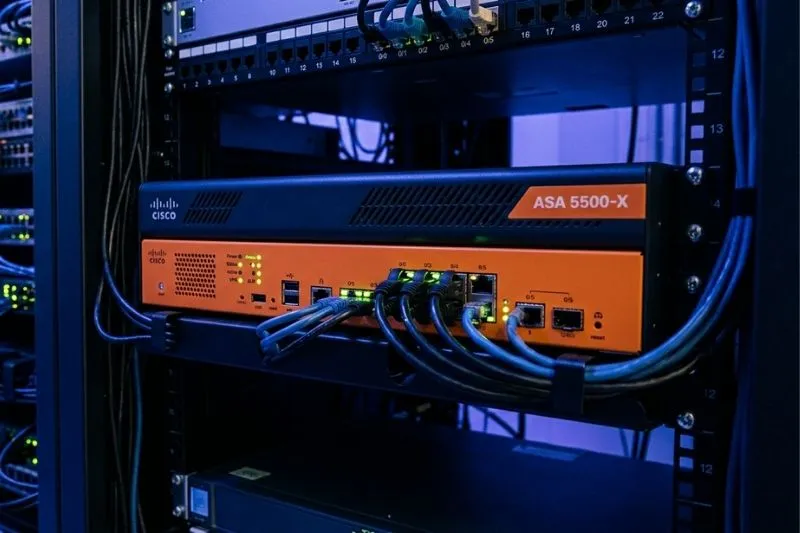
A firewall is a foundational element of business cybersecurity, serving as a barrier between trusted internal networks and untrusted external sources such as the internet. Its primary function is to monitor, filter, and control incoming and outgoing network traffic based on pre-defined security rules. By enforcing these policies, firewalls prevent unauthorized access, mitigate threats, and safeguard critical systems and data.
Modern firewalls go beyond traditional packet filtering, incorporating advanced threat detection, intrusion prevention, and deep packet inspection. They provide businesses with granular control over network traffic, enabling organizations to enforce security policies consistently across complex IT environments. In combination with other cybersecurity measures, a properly configured firewall significantly reduces the likelihood of breaches and operational disruption.
Recent Trends in Firewall Technology
Firewall technology has evolved to meet the challenges posed by cloud adoption, remote work, and increasingly sophisticated cyberattacks. Next-generation firewalls (NGFWs) integrate capabilities such as application awareness, intrusion prevention, and advanced malware detection into a single platform.
A recent industry survey found that over 75% of medium-to-large enterprises are replacing legacy firewalls with NGFWs to handle encrypted traffic inspection and real-time threat intelligence. Cloud-based firewalls, or Firewall-as-a-Service (FWaaS), are also gaining traction, providing centralized management and scalability for distributed networks.
Additionally, artificial intelligence and machine learning are being incorporated to detect anomalies and potential breaches automatically. Businesses now rely on firewalls not only for network traffic control but also for proactive threat prevention, making them a critical component of modern cybersecurity strategies.

Types of Firewalls and Their Use Cases
There are several types of firewall solutions designed to meet different business needs. Traditional packet-filtering firewalls inspect traffic at a network level and are effective for basic perimeter protection. Stateful inspection firewalls go a step further, tracking active connections and ensuring packets are legitimate before allowing passage.
Next-generation firewalls combine stateful inspection with advanced features such as application awareness, intrusion prevention, and integration with threat intelligence feeds. Proxy firewalls act as intermediaries between internal clients and external servers, providing content filtering and enhanced privacy. Cloud-based firewalls offer centralized management for organizations with hybrid or remote work environments, ensuring consistent protection across on-premises and cloud infrastructure.
Selecting the appropriate firewall type depends on factors including network complexity, regulatory requirements, performance needs, and the types of cyber threats the business faces.
Industries That Benefit Most from Advanced Firewall Protection
Some industries face heightened risk due to the nature of their operations and the sensitivity of their data, making firewalls especially critical.
Retail Chains
Retail chains handling large volumes of payment transactions require robust firewall protection to prevent financial fraud. Manufacturing and industrial firms rely on networked operational technology and IoT devices, which are susceptible to operational disruption if compromised.
Educational Institutions
Educational institutions, managing student and staff data across diverse networks, require granular traffic control and monitoring to prevent breaches.
Real Estate and Property Management
Real estate and property management companies, which store tenant financial and personal information, benefit from firewalls that enforce strict access controls.
Research and Development Organizations
Research and development organizations, especially those in technology or materials science, use firewalls to safeguard proprietary intellectual property and maintain competitive advantage.
By tailoring firewall solutions to industry-specific threats, businesses can achieve higher levels of security and regulatory compliance.
Best Practices for Selecting and Implementing a Firewall
Selecting the best firewall solution begins with a thorough assessment of business network architecture, traffic patterns, and risk exposure. Organizations must define security policies, identify critical assets, and determine compliance requirements before implementation.
Implementation should follow a structured approach, including proper configuration, testing, and integration with other cybersecurity measures. Ongoing monitoring, policy updates, and security audits are essential to ensure the firewall adapts to evolving threats. Employee training is also critical, as misconfigurations or human error can undermine even the most advanced firewall solutions.
Businesses should consider a combination of on-premises, cloud-based, and hybrid firewall models based on operational needs, scalability, and cost-effectiveness. Regularly reviewing and updating firewall rules, threat intelligence feeds, and incident response plans ensures sustained protection and alignment with cybersecurity best practices.
Tools and Services to Support Firewall Security
Advanced firewall solutions often integrate with other cybersecurity tools and services to enhance protection. Security Information and Event Management (SIEM) systems collect and analyze firewall logs for suspicious activity. Endpoint detection and response (EDR) solutions complement firewalls by monitoring devices for signs of compromise.
Threat intelligence platforms provide real-time updates on emerging attacks, enabling firewalls to block malicious traffic proactively. Network segmentation and access management tools work alongside firewalls to enforce least-privilege access and isolate critical systems from potential threats. These integrated tools collectively create a layered cybersecurity defense that strengthens firewall effectiveness.

AlphaKOR’s Role in Firewall Deployment and Management
AlphaKOR Group specializes in deploying and managing firewall solutions for businesses seeking comprehensive cybersecurity protection. AlphaKOR evaluates existing networks, designs firewall architectures tailored to business needs, and implements advanced configurations for maximum security.
For industries such as retail, manufacturing, education, real estate, and R&D, AlphaKOR provides continuous monitoring, rule management, and integration with endpoint and network security systems. Their expertise ensures that firewall policies are aligned with industry regulations, operational requirements, and evolving cyber threats. By leveraging AlphaKOR’s managed services, businesses can maintain robust protection without the overhead of maintaining a fully in-house firewall management team, achieving both efficiency and security.
Conclusion
Selecting the right firewall solution is critical for maintaining strong cybersecurity in modern business environments. With evolving threats, hybrid networks, and increasingly sophisticated attacks, a well-planned firewall strategy provides a first line of defense against unauthorized access, data breaches, and operational disruption.
By combining careful planning, advanced tools, and expert management from providers like AlphaKOR, businesses can deploy firewalls that not only protect critical assets but also support scalability, compliance, and long-term operational resilience. The combination of industry-specific solutions, continuous monitoring, and professional oversight ensures that firewall investments deliver maximum value while minimizing risk.
